

Key Takeaways
- A record label is a company that manages, brands, produces, and distributes sound recordings and music videos, handling everything from studio sessions to global streaming platforms so artists can focus on creating music.
- The “Big Three”—Universal Music Group, Sony Music Entertainment, and Warner Music Group—control approximately 65-70% of the global recorded music market, offering massive marketing power but often requiring artists to give up ownership of master recordings.
- Independent labels offer more creative freedom, often higher royalty percentages, and faster decision-making than major labels, with profit-sharing arrangements like 50/50 splits becoming common.
- Record labels are categorized primarily into major labels and independent labels, with thousands of indies worldwide serving specialized genres and regional markets.
- Today, artists can choose between major labels, indie labels, and fully DIY careers, using resources like Indie Bible to access global promotion tools without signing traditional deals.
Introduction: What Is a Record Label in 2026?
A record label functions as a multifaceted company that helps artists create, release, and monetize recorded music. Labels support artists in creating, promoting, and distributing music, managing logistics that many artists cannot handle alone—from booking studio time to coordinating releases across 400+ digital streaming platforms worldwide.
The role of labels has evolved dramatically from the vinyl-dominated pre-digital era, when they exclusively controlled physical manufacturing, pressing plants, and retail distribution chains, acting as gatekeepers who could make or break careers. Today, they operate as partners across recording, streaming, social media, and live performance ecosystems, adapting to a landscape where streaming accounts for 67% of industry revenues.
Three major music groups dominate the global landscape: Universal Music Group, Sony Music Entertainment, and Warner Music Group. Yet thousands of independent labels worldwide offer alternatives with more flexibility and artist-friendly terms. For artists choosing the DIY route, resources like the Indie Bible now provide access to global promotion strategies, allowing musicians to operate label-style functions on their own terms while retaining full ownership of their work.
What Do Record Labels Actually Do?
Labels provide money, expertise, and infrastructure so artists can focus more on music and less on logistics and business operations. This fundamental exchange—investment for ownership—has defined the industry since the late 19th century, though the specifics have evolved considerably.
Labels typically finance recording sessions, cover marketing and promotion costs, and coordinate release schedules across countries and formats. Production budgets for major releases can range from $50,000 to $500,000 per album, including studio fees of $1,000-$5,000 per day and top producer rates exceeding $100,000 per track.
How labels earn money:
- Streaming royalties from platforms like Spotify, Apple Music, and Amazon Music
- Digital downloads and physical sales (CDs, vinyl)
- Sync licensing for film, TV, games, and advertisements (generating $100 million annually industry-wide)
- Neighboring rights and performance royalties
- Merchandise and live event promotions (under 360 deals)
Labels handle the financial and legal aspects of music publishing, including copyrighting and trademarking, and earn money through music sales, streaming royalties, licensing deals, merchandise, and live event promotions. In exchange for this investment and risk, labels usually take ownership or long-term control of the master recordings and a significant share of revenue.
One reality many artists don’t anticipate: record labels may shelve an artist’s album with no intention of promoting it, often due to a shift in focus to other artists or internal restructuring. Even in a DIY era, many artists still seek labels for scale, credibility, and access to global marketing networks—but understanding these risks is essential before signing.
Core Departments: How a Record Label Is Organized
Both major labels and larger indie labels organize their operations into specialized departments, though smaller independents often combine several roles into one or two people. Here’s how the main divisions typically function:
A&R (Artists & Repertoire) serves as the talent-scouting and signing division. A&R teams at record labels scout and recruit musicians who align with their brand and evaluate their long-term potential to thrive and evolve. In 2026, scouts analyze TikTok virality, Instagram Reels engagement rates above 5%, and Spotify for Artists data—with thresholds like 10,000+ monthly listeners or 50,000+ pre-saves often triggering serious interest. Major signings like Ice Spice in 2023 came directly from viral TikTok moments exceeding 1 billion views.
Marketing and Promotion plans release campaigns, social media strategy, playlist pitching, influencer collaborations, and PR outreach to blogs, radio, and press. Labels manage marketing and promotional campaigns to increase their artists’ visibility, utilizing data on streaming, demographics, and fan behavior to fine-tune their strategies. Major label marketing budgets can hit $1-5 million per significant release.
Digital and Streaming teams pitch to Spotify (with 635 million monthly active users in Q1 2026), Apple Music, Amazon Music, and YouTube Music. They analyze data, optimize release dates for algorithmic recommendations, and manage playlist relationships—editorial playlists drive approximately 20% of streams according to Chartmetric data.
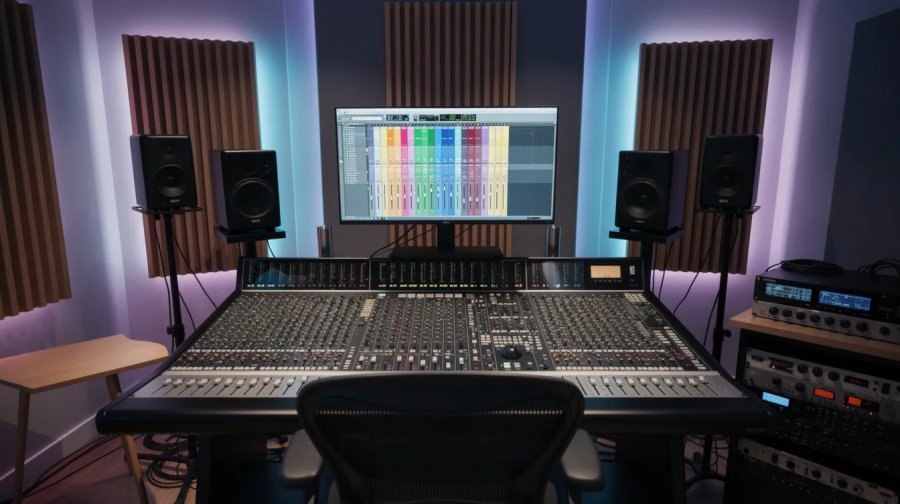
Production Departments coordinate studios, producers, mixing and mastering engineers, ensuring albums and singles are delivered on time and on budget. Some majors operate in-house facilities like UMG’s Conway Studios.
Legal and Business Affairs handles contracts, copyright registration, sample clearances, licensing negotiations, and compliance with different countries’ regulations.
Finance and Royalty Accounting tracks income from multiple sources and reports earnings to artists, though delays average 6-12 months with complex royalty statements.
A&R, Artist Development, and Creative Direction
A&R and artist development shape both the music and the long-term career path of artists signed to labels. These functions distinguish professional label partnerships from simple distribution deals.
A&R teams at major labels like Universal Music or Sony Music search for artists using social metrics (followers, engagement), streaming performance, and live buzz—not just demos. The scouting process has become increasingly data-driven, with AI tools like Soundcharts’ predictive analytics forecasting potential hits based on 70+ data points including pre-save campaign conversion rates.
Artist development involves refining songwriting, live performance skills, vocal coaching, and recording approach over months or years—especially for developing artists who need time to find their sound. Major label development programs typically span 1-3 years, including vocal coaching at $500/hour, songwriting camps costing $20,000/week, and live performance training via label-funded residencies.
Record labels assist artists in their careers by helping them refine their image, style, and sound, providing guidance on cover artwork, photoshoots, and music videos. Creative direction builds a coherent visual and narrative identity: artwork, logo, photography style, fashion, stage design—all aligned across albums, singles, and social media. Sony’s work with Rosalía exemplifies this approach, blending flamenco and hyperpop aesthetics across merchandise lines grossing $10 million annually.
The relationship between record labels and artists can be difficult, often leading to conflicts over the type of sound or songs the artist wants to make, which may result in changes to the artist’s artwork or titles before release. Balancing the artist’s vision with commercial considerations requires ongoing negotiation.
For those choosing to stay DIY or work with small labels, independent resources like the Indie Bible can support artist development by connecting them to coaches, PR firms, and reviewers without requiring a traditional deal.
Music Production, Distribution, and Promotion
Labels turn songs into professional masters, then make them available worldwide and actively push them to audiences through coordinated campaigns.
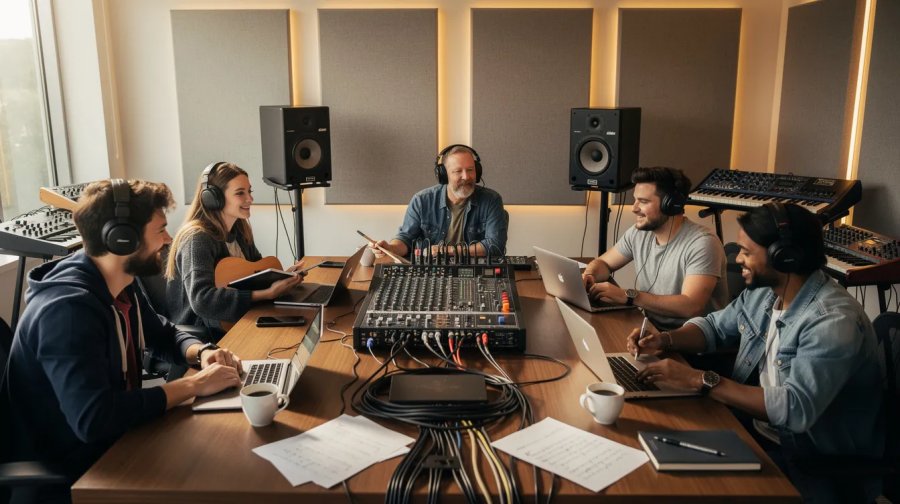
Production involves labels budgeting studio time, hiring producers and engineers, and deciding on single versus album strategies. Production pipelines typically allocate 40% to recording, 30% to mixing and mastering (top engineers like Manny Marroquin charge $50,000 per track), and 30% for contingencies. Some labels run their own in-house studios, while others work with third-party facilities like Abbey Road at $2,000 per day.
Distribution ensures music reaches 8 billion+ streams via digital service providers worldwide. Major labels often have their own distribution arms within the parent music group—UMG operates Caroline and Virgin Music, Sony Music runs The Orchard, and Warner Music manages ADA. Many indie labels use third-party digital distributors to access the same platforms.
Promotion involves multi-channel promotional campaigns:
- Radio plugging via independent promoters ($1,000-$10,000 per spin in top markets)
- Press releases and blog features
- Playlist pitching to editorial and algorithmic playlists
- TikTok campaigns sparking 100 million+ user-generated videos
- YouTube premieres and Vevo videos (1 billion views monthly)
- Targeted online ads with $10,000-$100,000 budgets
Independent artists can now access many of these distribution and promotion tools directly. Platforms like the Indie Bible help them find genre- and country-specific outlets on a limited budget, organizing over 1,500 pages of contacts across 16 sections sorted by genre and geographic location.
Major Labels vs. Independent Labels
The global recorded music business is dominated by a few major music groups, with a vast independent sector surrounding them. As of 2012, only three labels are classified as major labels: Sony Music Group, Universal Music Group, and Warner Music Group, which collectively held a global market share of approximately 65-70%.
The Big Three in 2026:
| Label | Headquarters | Key Imprints | 2024 Revenue |
|---|---|---|---|
| Universal Music Group | Santa Monica | Interscope, Republic | $11.5 billion |
| Sony Music Entertainment | New York | Columbia, RCA | $9.8 billion |
| Warner Music Group | New York | Warner Records, Atlantic | $6.3 billion |
Major labels operate as part of global conglomerates, offering vast resources and prioritizing commercial success, while independent labels typically provide more flexibility and creative freedom but with fewer financial resources. The majors leverage proprietary distribution networks ensuring instant global delivery to over 400 DSPs.
Major labels handle massive global promotion, while indie labels focus on specialized genres with more flexibility. Independent labels number over 10,000 worldwide, representing approximately 15% of global market share collectively according to Merlin’s 2025 membership data. Examples include Domino Recording Company (Arctic Monkeys), Ninja Tune (electronic music specialists), and Sub Pop.
Independent labels offer more creative freedom, often higher royalty percentages, and faster decision-making than major labels. Artists working with indies often retain up to 80-90% of royalties versus majors’ typical 15-20% after recoupment.
Some successful indie labels sign distribution or services deals with major music groups, becoming imprints that keep creative autonomy while gaining access to global infrastructure—a joint venture approach that blends the best of both worlds. Artists should consider their goals (creative control versus speed of growth) when deciding whether to pursue major-label deals, indie partnerships, or a DIY route supported by resources like Indie Bible.
How Record Deals Work: Advances, Royalties, and 360 Agreements
Record contracts are complex legal agreements defining who owns the music, how revenue is split, and what obligations each side has. Understanding these structures is essential before signing anything.
When an artist signs to a label, they typically receive an advance, which is upfront money to support their career, but this advance is recoupable, meaning the artist won’t see royalty payouts until the label earns back that advance through sales and streams. Advances for emerging acts range from $50,000-$200,000 at indies to $100,000-$2 million at majors.
Standard royalty structures give labels ownership of master recordings with significant revenue retention—typically 80-85% after recoupment—while artists receive 12-20% on 85-90% of the published price to dealers. In traditional record label deals, the label owns the master recording, which means they control the right to license, monetize, and distribute the final recorded version of a song, while artists usually retain their publishing rights unless otherwise negotiated.
360 deals are contracts where labels participate in additional income streams such as touring, merchandise, sponsorships, and brand deals, in exchange for larger advances and broader support. New types of deals called “360” deals are being made with artists, where labels are given rights and percentages to the artist’s touring, merchandising, and endorsements in exchange for higher advance payments and better revenue splits. These became common in the 2000s as recorded music revenue fell.
Common deal types:
| Deal Type | Who Owns Masters | Typical Split | Best For |
|---|---|---|---|
| Artist Deal/Exclusive License | Label | 15-20% to artist | New artists seeking development |
| Licensing Deal | Artist | 50/50 after costs | Established artists with leverage |
| Distribution Deal | Artist | 70-85% to artist | DIY artists needing reach |
An Artist Deal/Exclusive License typically involves the label paying an advance and funding production while taking ownership of the copyright in exchange for a smaller revenue share for the artist. Licensing Deals allow the artist to produce their own music and license it to the label for a specific period or territory—popular with indies like AWAL.
Major labels tend to offer higher advances but take a larger cut of the profits and take longer to recoup, while independent labels often offer smaller advances but better revenue splits and more transparency in their deals. Independent labels often offer larger artist royalties with profit-sharing agreements, such as a 50-50 deal, which is not uncommon, contrasting with the more restrictive terms often found in major label contracts.
A Profit Split (50/50) is common among independent labels, where expenses are recouped, and the remaining profit is split 50/50. Many artists have had disputes with their labels over ownership and control of their music, leading to high-profile conflicts involving artists like Taylor Swift and Kesha.
Artists should use legal counsel and educational resources—including directories like the Indie Bible to find music business professionals—before signing any long-term agreement.
New Business Models: Digital, Netlabels, and DIY Pathways
Streaming, social media, and affordable home recording have reshaped what a “label” can be and how artists build careers in the modern culture of music creation.
Netlabels emerged in the early 2000s, releasing music primarily or exclusively online—sometimes for free or under Creative Commons licenses. Companies like Monstercat in the electronic music space release 1,000+ tracks yearly with a focus on merchandise and sync licensing rather than traditional sales.
Modern digital-first labels focus on playlists, algorithmic discovery, and rapid release cycles rather than traditional album campaigns and physical formats. Technology has enabled these leaner operations to compete effectively in specific niches, from alternative rock to dance music and beyond.
Many artists now choose a fully DIY approach, acting as their own label: funding recordings, commissioning artwork, handling distribution through services like DistroKid ($20/year unlimited) or TuneCore, and running their own PR campaigns. Data shows 40% of Spotify’s top 1,000 daily new releases come from DIY artists according to 2026 Chartmetric analysis.
The Indie Bible fits into this landscape by giving DIY and indie-label artists a structured way to find blogs, radio stations, playlists, and reviewers around the world—replicating some label functions without giving up ownership. With over 1,500 pages organized by genre and geography, it connects artists to 2,000+ bloggers, 500+ playlists, and radio stations for affordable instant access.
Crowdfunding, fan clubs, and direct-to-fan platforms serve as complementary strategies that can reduce dependence on traditional label advances while building loyal audiences.

How Independent Artists Can Compete Without a Traditional Label
This section provides practical guidance for artists who may never sign with Universal Music, Sony Music, or Warner Music, yet still want professional careers producing music and building sustainable success.
Build a virtual label team by connecting with freelance producers on SoundBetter ($200-$1,000/track), mixers, designers using Canva or Procreate ($10/month), marketers, and publicists. This replicates label infrastructure without requiring you to sign away ownership.
Use global digital distributors to place music on all major streaming services. Be strategic with release timing—Tuesdays work best for Spotify’s Release Radar reaching 100 million users weekly—and maintain consistent output to feed algorithmic recommendations.
Target your promotion by identifying genre-specific blogs, playlists, and radio shows. The Indie Bible’s database organizes these outlets by genre and geography to speed up outreach, with user testimonials citing 300% stream growth via targeted efforts. This approach to PR campaigns can rival what most labels achieve for emerging roster additions.
Develop data literacy by tracking streaming analytics, social metrics, and fan locations through Spotify for Artists and similar tools. This reveals 20-30% stream uplift from playlist adds and helps plan tours in high-fan cities—5,000 monthly listeners in Berlin, for example, flags EU expansion potential.
Treat your career like a business by setting budgets ($5,000-20,000 per release), timelines, and measurable goals for each release cycle. Aim for benchmarks like 100,000 streams (recouping via $400-500), 1,000 mailing list subscribers per release via Linktree or Bandcamp, and consistent growth in merchandise sales.
Artists like Russ achieved 100 million+ streams independently before signing with Columbia, proving that success without traditional label backing is not only possible but increasingly common for musicians willing to handle all the work themselves.
FAQ
Do I really need a record label to be successful in the music industry?
Many artists achieve substantial streaming numbers and sustainable income without signing traditional record deals. Using digital distributors, social media marketing, and tools like Indie Bible to handle promotion, independent musicians can build careers that rival label-backed acts in their genre. Labels become more valuable when an artist’s momentum requires larger budgets, global marketing infrastructure, or complex licensing deals that are difficult to manage alone. The smartest approach is often to build a track record independently first, then evaluate label offers from a position of strength—with proven streams, an established fan base, and leverage to negotiate better terms.
How can I tell if a record deal is fair?
Look closely at four key areas: who owns the masters (you or the label), how long the contract lasts (3-5 years is more reasonable than 7+), how recoupment works (what expenses count against your royalties), and what percentage of each revenue stream you will receive after costs. Red flags include perpetual ownership clauses, excessive 360 deal percentages above 15-20% on touring and merchandise, and unclear accounting terms. Always consult an experienced music attorney or qualified legal adviser before signing—even on seemingly small indie deals. Educational resources and professional directories, including those found through Indie Bible, can help artists find trustworthy advisors at rates of $300-1,000 per hour.
What is the difference between a record label and a music publisher?
Record labels focus on sound recordings (masters)—the actual recorded performances of songs—while music publishers manage the underlying compositions (the songs themselves), including songwriting royalties and licensing for covers and syncs. When you record a cover of someone else’s song, you deal with both: the original publisher for the composition rights and your own label (or distributor) for your new recording. Some large music companies operate both label and publishing divisions under the same music group, but these are legally distinct roles with separate contracts and revenue streams. Artists should understand which agreements relate to recordings versus songwriting before signing anything.
Can I work with a label for one project and stay independent otherwise?
Short-term licensing or distribution deals can allow artists to partner with labels for a single album or EP while retaining ownership and flexibility for future releases. These arrangements are more common with independent labels or services companies than with the largest major labels, which typically prefer longer commitments. When negotiating such deals, ensure clear reversion clauses stating exactly when rights return to you after a defined period—typically 3-5 years. This approach lets you test a partnership without permanent commitment, making it ideal for artists who want to perform live, build their brand, and create art on their own terms while accessing label resources for specific projects.
How do I get on the radar of A&R teams at major labels?
Focus on organic traction first: strong songs, consistent releases, professional branding, and measurable growth in streams, followers, and ticket sales. A&R staff at Universal Music Group, Sony Music Entertainment, and Warner Music regularly monitor key playlists, social platforms like TikTok and Instagram, and festival lineups (like SXSW with 1,000+ scouts) for emerging acts. Thresholds that trigger serious interest include 50,000+ pre-saves, engagement rates above 5%, and 10,000+ monthly listeners with strong growth curves. Leverage Indie Bible-style listings to secure press coverage and radio plays, which demonstrate momentum and professionalism when approaching A&R representatives—showing you can build success independently makes labels more eager to invest in your established potential.